Author: Lynn Green

  • Is Britain Going To Pot?

    Is Britain Going To Pot?


    **This is a personal website and reflects my thoughts and convictions. It does not represent any official position held by Youth With A Mission.**

    You might be relieved to learn that this blog is not about Brexit.

    This is about pot, weed, cannabis, marijuana, hashish, bhang, kif, Mary Jane, dope, skunk….My goodness, there are so many names for this stuff!

    SOFTENING US UP FOR CHANGE IN THE LAW? My wife, Marti, and I are just back from a visit to Colorado, where cannabis has been approved for medical and recreational use for quite a few years, so we have some recent experience with the results of legalization.  In the few days since we got back, I see that a number of national newspapers and several TV programs have focused on the pros and cons of legalizing cannabis.  It is quite obvious that they usually lean towards the positives, especially since Canada just decided it was in the best interests of the nation to make it legal.    When this kind of media onslaught appears, my experience tells me that it usually implies some measure of government and media coordination.  Someone with quite a lot of clout has decided to change the law, so first they aim to change public opinion.


    THE FIRST ARGUMENT The most common argument is summarized by this quote from Canadian Prime Minister Justin Trudeau saying that it had become, “too easy for our kids to get marijuana – and for criminals to reap the profits.”  So we asked around our friends and family in Colorado to see if legalizing stopped illegal dealing in the state.  The answer was;

    No, there are always people who will grow and sell illegally because they want to avoid the state tax and the regulations which were the inevitable result of legalization.  They can undercut the legal pot shops and make bigger profit.” So that seems to be one argument shot down, or at least seriously holed.

    Since my home state, Colorado, led the USA in legalizing pot, it would be good to know what the Governor thinks now.  In a recent interview with CNN, he explained that the crime rate has been rising since pot was made legal six years ago and he has not ruled out making it illegal again.  He said:

    Trust me, if the data was coming back and we saw spikes in violent crime, we saw spikes in overall crime, there would be a lot of people looking for that bottle and figuring out how we get the genie back in.  It doesn’t seem likely to me, but I’m not ruling it out.


    MY CANNABIS STORYAt this point, I should make a confession.  In the year before I committed my life to the lordship of Christ, I smoked hashish (cannabis resin) at least a couple of times a week.  I was attending the University of Colorado at the time.  I enjoyed it a lot and wanted to smoke whenever it was possible.  Although I was in my third year of a four-year electrical engineering degree, it was my first year completely away from home, as I had done the first two years at a junior college in my home town.  When I got to the home of CU in Boulder, I joined in the party atmosphere.

    I then proceeded to demonstrate an obvious truism; partying, drunkenness and pot smoking don’t contribute to an engineering degree!  It wasn’t long before I was experiencing anxieties and there was a reason for that.  It’s not much fun to go to a math class, having missed the two previous ones, only to realize that you can’t begin to understand what the professor is talking about.  In those circumstances I could see two choices:  I could stop partying and study with the “nerds” who understood, or I could reduce my anxieties with hashish.  I smoked more. 

    The problem was I was only anxiety free when I was high.  Every high was followed by ever more excruciating anxieties. Back to the young man who was prescribed cannabis to reduce anxiety:  I notice that he is not addressing the reasons for his anxiety.  He is still avoiding the hard choices required to make his life better, but the smoking makes him feel less anxious–at least temporarily.  It seems quite clear to me that his prescription cannabis is not helping him lead a better, more fulfilling and satisfying life.  All he gets is a temporary delusion that things aren’t as bad as he feels they are.

    A BETTER CURE There are much better cures for anxiety.  Since my conversion, I have aimed to live clear-conscience Christianity and that has given me the key to anxiety management.  Where there are reasons for me to feel anxious, I should never avoid the circumstances causing the anxiety or attempt to anesthetize my conscience; I must face the reasons and make the choices that reduce my anxieties.  However, sometimes anxieties arise for no identifiable reason.  In those cases, once again, a clear Christian faith provides a pathway to overcoming.  I have access to God’s presence, His promises and His reassuring love for me as an individual.  When I focus on those realities, anxiety begins to shrivel.

    I conclude that substance use, whether alcohol or cannabis or another something else, is no way to manage anxiety or fear.  It is so much better to change the way I think and live and thus increase relational harmony and whole-person peace—shalom.

    REVENUE FOR GOVERNMENTS I think the only obvious case for legalizing pot is the case for revenue. When a government legalizes and taxes pot, they will certainly increase their tax income.  How much of that will have to go on extra policing is hard to say because it is so difficult to say that certain crimes are the result of pot use and others are not.  But it’s not just a matter of policing.  Some people will be able to use pot recreationally without it apparently affecting their behavior, but others will lose more time from work, withdraw from relationships, become less industrious and make more mistakes at work.  Some of those mistakes can result in injury or death.  How do we calculate the cost of that?

    Driving under the influence of cannabis can be as dangerous as driving drunk.  Note the following quote from a Canadian news service earlier this year,

    As Canada prepares for legal pot, the federal government plans to spend as much as $80-million to train 750 police officers to smoke out high drivers. But how sound is the test? A Fifth Estate investigation raises serious questions, showing it can lead to false arrests, is prone to police bias and, according to one scientific expert, is no better at detecting high drivers than “flipping a coin”

    The same article states that the Canadian government has spent as much as $80 million to train 750 police officers to “smoke out high drivers”.  So where does all this leave the equation that all governments have to work out?  (Revenue minus costs equals the overall financial benefit.)  The answer is not clear, but it is not likely to be an overall positive income.

    We become used to governments presenting this sort of decision in purely financial terms, but they are always more than that.  This one is certainly about more than mammon.  What impact will legalization have on the character of our nation?  Will it be a help or a hindrance to young people as they grow up?  Will it help develop more reliable and responsible citizens?  The answer to that one is self-evident.

    So is there a case for legalizing pot?  Should Britain go the same way some other liberal western democracies have gone?  Now that it seems many other nations will follow suit, so should we be among them?

    A few months ago I watched a BBC documentary in which about half a dozen British TV celebrities were taken to Colorado where they talked to lots of people about pot.  They toured pot farms and went to the specialist shops where they tried many different kinds of smokes and eats.  They were older celebrities—I would say the average age was middle fifties—so their giggling and fooling around was quite entertaining.  After their fascinating and picturesque tour was over, they were asked the big question:


    “Would you recommend that pot be legalised in Britain?” 


    I was sure their answer would be yes.  But to my amazement, each one had exactly the same answer. “After all we have seen and experienced on this trip—the answer is no.”

    I agree.

    Lynn Green.

  • Congregating in the Egyptian Desert

    Congregating in the Egyptian Desert


    **This is a personal website and reflects my thoughts and convictions. It does not represent any official position held by Youth With A Mission.**

    CONGREGATING IN THE EGYPTIAN DESERT

    Why would two to three thousand people from dozens of nations gather in the Western desert of Egypt (between Cairo and Alexandria) just to worship and pray?  There were no guest speakers, and the very long sessions were mostly prayer and worship.  In fact at one point the whole group simply sang the name of Jesus (sounds like “Yassu” in Arabic) for nearly an hour.  Why would over 300 Chinese risk coming to the event, knowing they are likely to be questioned by the Police and possibly punished on their return?  Why would people pay their own way, then sit on buses travelling under armed guard from Cairo to the desert and back each day – a journey that took at least three hours?

    Described that way, it sounds like torture to me — especially the idea of being in a tent in the desert with the temperature approaching 40 degrees C.  But it wasn’t!  Something very powerful happened, of which I can only give you a glimpse.  In fact trying to describe this event reminds me of the Apostle Paul’s phrase that we “see through a glass darkly”. 

    THE COMPLEMENTARY BODY

    Perhaps it helps to think firstly about who we are.  We are all created as individuals, and we differ immensely.  Some of us are very logical and concrete and linear in the way we think and live – I am one of those.  Others are deeply moved by symbolic gestures, visions and dreams or connections that remind them of scripture passages.  This kind of gathering tends to attract more of the people who get visions and dreams and see great significance in what sometimes looks like coincidences to me.  I need these people, and they need me.  Together we represent body, as Paul writes in I Corinthians 12, and we can safely discern what God is saying and doing – at least as much as He wants us to .  But, there will always be mysteries.

    ANCIENT “GODS” IN MODERN TIMES

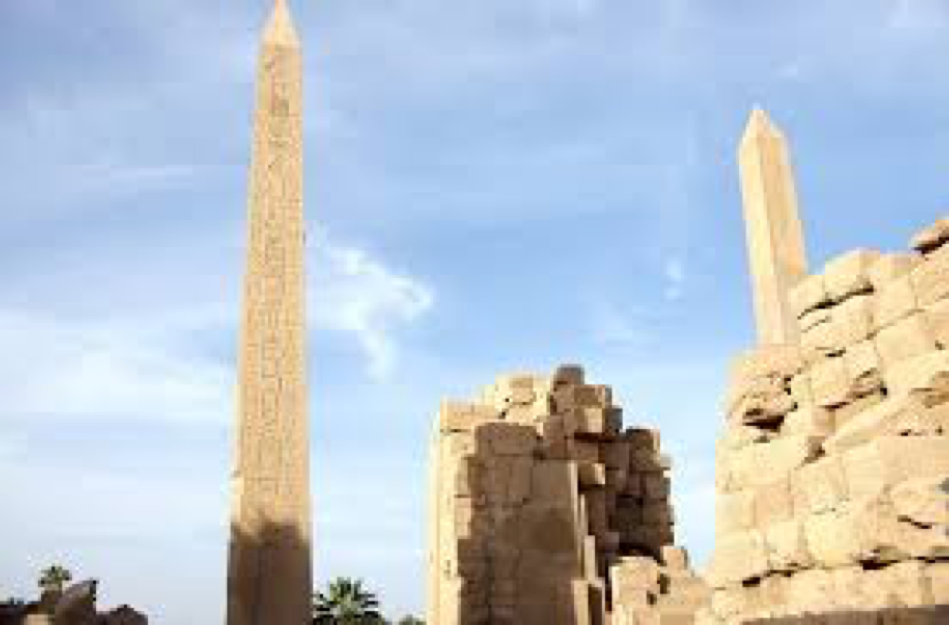
    Let me back up a bit, though.  It didn’t start in the Western desert.  About ninety of us started in Aswan, in the region of Egypt where there were the most temples, obelisks and symbols of the ancient Egyptian gods.  These “gods” manifest themselves right through human history, and those who seek spiritual power often gravitate back to the symbols that appeared in Egypt about 5000 years ago.  I think especially of the sun god Ra.  Here are some obvious illustrations:  As I understand it, the family of the Japanese Emperor make a covenant with the sun god and that has a direct connection to their flag and national symbol of the rising sun. 

    That symbol appears in many other nations too, including Korea.  Freemasons and others have recognised the power in the symbols of ancient Egypt, so a couple of centuries ago they exported the obelisks from the Luxor region to the financial capitals of the world at that time.  These obelisks still stand in London, Rome (which has eight), Paris and New York; in fact about 25 nations have obelisks in their capital cities. These were all very important symbols of prosperity in the eyes of Freemasons, and so a huge amount of effort was put into dismantling, transporting and reassembling them all across the world.

    A SIGN TO US?

    To the modern mind symbols like that often don’t make immediate sense, and yet we see the significance of symbols throughout the Scriptures.  A central command of the Ten Commandments that God gave is that we should have no idols, and when you stop and think about the Biblical stories they are full of physical objects and acts that seemed to have direct spiritual power.  I am deeply convinced that some material objects represent a direct connection to spiritual power.  Interestingly, on the first day we began to worship in Aswan, with a number of Japanese believers present, a recently-erected 40 ton golden statue fell face downward in Okinawa.  It was exactly like the story of Dagon in Judges 16.  If you do a google search you can see a picture of it.  The statue was 38 metres high (125 feet).

    Here is what I think was going on both in Aswan and in the Western desert.  Firstly, Egypt is a spiritual “mother” nation, and is the source of historical spiritual power, but can also be a mother of nations for blessing.  We gathered in Egypt because we were convinced that God had said to do so, but gathering in Egypt alone does not give you power.  What gives power is when people come together across the usual social divides:  those can be national, racial, cultural, linguistic, economic or gender.  The list could go on and on, and has to include age.  I have been in many of these prayer and worship gatherings now, and the most notable characteristic of them is family affection.  When God’s people come together and bridge all the usual divides which cause conflict, then we fulfill the condition for exercising the authority that Paul describes in Ephesians 1 and elsewhere, when he says “we are seated with Christ … far above all principalities and powers”. 

    ARE WE UNDER OR OVER?

    We can get used to operating under the spiritual powers, and the divisions, suspicion, fear and even violence that they foster between different groups.  But the Body of Christ is called to oneness and interdependence across all these divides.  From that place we have the authority that the Bible describes. Sadly, we too rarely rise to that high calling of authority.

    So that is what we did in Egypt.  We let the Holy Spirit lead without a pre-planned agenda, and we ended up with a sense of God speaking into various nations, including China, Japan and Korea, but also with a day-long emphasis on the entire continent of Africa.

    I have to add one thing, otherwise these events could appear to have no direct application.  The Lord did bring a lot of encouragement to the Egyptians, who have experienced great discouragement and despondency, especially in the last decade or so. The Christians there are discriminated against, and the nation itself has experienced one huge setback after another. 

    So there were many words of encouragement to the Egyptians, but it was not only that.  On the second to last day, a soft-spoken Sudanese pastor stood to describe how much racial discrimination he had experienced at the hands of Egyptians, including the Christians.  It exposed another divide that God wanted us to close.  The Egyptian response was deep humility, worship, repentance, and asking forgiveness, not only of the Sudanese who were there but all the Africans, as they realised that they had discriminated on the basis of skin colour.

    Throughout the four days, we did not seek to address any of the spiritual forces, but we focussed on worshipping Jesus. As we did so some of these issues of division were dealt with indirectly and, I believe, the kingdom of darkness were dealt a mighty blow.

    The principalities and powers are forces of division, fear, hatred, and violence—all towards the end that the image of God would be eradicated from the earth.  However during a few days in the deserts of Egypt under a burning sun, we bridged  many of the divisions, and it seemed that God smiled—then He achieved some of His purposes all over the earth because a group of His people really did act as His body with Jesus as the Head.

    Lynn Green.

  • Faith and Finances – Session 4

    Faith and Finances – Session 4

    **This is a personal website and reflects my thoughts and convictions. It does not represent any official position held by Youth With A Mission.**

    Faith and Finances Session 4
    (Why God does not provide to me?)

    Don’t be surprised if you go through a period of time where you’re kind of living day to day and you’re not sure what you’re going to have for tomorrow. It’s a good exercise don’t resent it.

    Jesus said and Matthew 6 which is don’t be anxious about what you’re going to eat and what you’re going to wear and you said you know your father knows you. You have a need for these things but he said to seek first the kingdom of God and His righteousness and then all these things will be added unto you.

    Seek first the kingdom of God His righteousness and all these things will be added unto you.

    Lynn Green.

  • O, Sacred Head Now Wounded

    O, Sacred Head Now Wounded


    **This is a personal website and reflects my thoughts and convictions. It does not represent any official position held by Youth With A Mission.**

    When Marti and I were first married we spent several months in Northern Ireland, a deeply enriching experience.  Although I had grown up in a Christian family, I met Christian men in Northern Ireland who were very different.  So many of them had a tenderness mixed with their unmistakable masculinity.  I had never heard men talk about the beauty of bird-song or discuss poetry.  I must add that my own dad loved poetry, but I don’t think he found like-minded men among his friends.  Those Irish men inspired me!

    We stayed in touch with many friends in N.I. and visited regularly for years afterward.  At one point we had the great privilege of close relationship with a large fellowship which had emerged out of the move of the Holy Spirit in the 1970s.  The fellowship was packed with very gifted musicians and they had a wonderful ability to find outstanding historical hymns and to then put them to modern (updated) melodies—often with a strong beat.  As I think about it now I can still visualize and hear their meeting hall filled with joyful music, their stamping feet keeping rhythm along with the drums and men praising God with all their might.

    Since then, I have been drawn to any efforts to resurrect some of the wonderful old hymns – – hymns that are moving and convey Biblical truths and often excellent theology.  I have listened again and again to The Second Chapter of Acts and their two volumes of hymns.  To my great joy, I recently happened across another group of musicians who have given new life to some old hymns.  Their two volumes of hymns were recorded more than a decade ago, but I just found them via Spotify.

    One hymn in particular moved me to tears the first couple of times I heard it.  “O Sacred Head Now Wounded” was written nearly a thousand years ago by Bernard of Clairvaux.  It has been set to different music from time to time in the intervening centuries.  The Africa-born group, Selah, have produced a deeply inspirational version with a great arrangement and perfectly matched vocals.

    The YouTube link below will enable you to read and meditate on the ancient lyrics, packed with deep content.  I hope you have the time to listen again and again and let the Holy Spirit draw you closer to Jesus!

    Lynn Green.