
Category: Current Events

  • The Marshmallow Experiment

    The Marshmallow Experiment

    The Marshmallow Experiment

    (Can You Wait?)

    The marshmallow experiment was conducted in the late 1960s by Professor Walter Mischel at Stanford University.  He would give a child a marshmallow or cookie, then tell them that he was leaving and would be back in 15 minutes.  Then he made a promise that, though they were free to eat it, if they kept it until he got back, he would give them a second marshmallow or cookie.  This was a simple way to measure what economist call time preference.  That is the ability to apply self-restraint now for a better outcome later.

    The professor then followed the children up decades later and there was a clear correlation between those who could wait and their tendency to do well in school, have a lower body mass index and be free from addictions.

    I was fascinated by the outcome of this simple experiment, which I learned about from a book I am currently reading.  The author then went on to write a remarkable passage on the essence of prosperous societies.  

    This ability to restrain immediate wants/desires for long-term benefit means that…” individuals begin to appreciate investing in the long run and start prioritizing future outcomes.  A society in which individuals bequeath their children more than what they received from their parents is a civilized society: it is a place where life is improving, and people live with a purpose of making the next generation’s lives better.  As society’s capital levels continue to increase, productivity increases, and along with it, quality of life. With the security of their basic needs assured, and the dangers of the environment averted, people turn their attention to more profound aspects of life than material well-being and the drudgery of work.  They cultivate families and social ties, undertake cultural, artistic and literary projects; and seek to offer lasting contributions to their community and the world. Civilization is not about capital accumulation per se; rather it is about what capital accumulation allows humans to achieve, the flourishing and freedom to seek higher meaning in life when their base needs are met, and most pressing dangers averted.” (From The Bitcoin Standard by Saifedean Ammous)

    I am so grateful to my parents and their generation!  They suffered through the great depression, fought or supported the war effort in WWII, then went on to serve subsequent generations by building the complex physical and economic infrastructures of the Western nations, so that many of us might pursue courses of “higher meaning in life”.  

    My parents were not able to leave a material legacy to my siblings and me; their estate was consumed by the cost of their medical care in their last several years—but that is another important story.  But they still left us so much, including materially, because their life’s work contributed to the development of broad-based wealth in our society.  They also left us their outstanding example of lives lived virtuously.

    Their example equipped my siblings and me to live prosperous lives, even though we often chose to live for higher meaning.  Our children are now old enough for us to see that they are effectively standing on our shoulders, as we stood on our parent’s shoulders.  But will this virtuous cycle continue from one generation to the next?  Right now, that seems doubtful.

    The virtuous cycle gradually produces more and more opportunity for all, hence the ongoing flood of people wanting to immigrate to the prosperous and relatively free societies of Western nations.  It does not, however, produce equality.  Reliable, honest and hard-working people normally reap rewards and if their children are the same, they pile up more rewards—and on it goes.  However, those who are not industrious, honest and reliable do not fare as well.  So, their children start off with less advantage than others.

    Let’s say for a moment that I am one of the least advantaged people; I have some choices to make. I can determine to be a hard-working person of good character, or I can blame society for my lack of advantage and demand that I should be given what I want.  

    My father was a great example of the former.  He was “dealt a bad hand.”  His father lost everything in the double-whammy of the dustbowl and the great depression.  He was a farmer in Kansas, where once-prosperous farms were reduced to desert.  That family of 11 had to move west to a small house on a poor, but irrigated farm of only 27 acres. That experience pushed my grandfather over the edge and his anger turned to uncontrollable, murderous rages.  When he went into a rage, my dad and his siblings would clear out for several days, knowing that their lives were in danger if they stayed at home.  One of my early memories is of my Dad driving to my grandparents’ home to rescue my grandmother, who was being threatened with a shotgun.  She stayed with us for several days before it was safe to go back.

    Later in life, I asked my dad how he turned out to be such a good father and he said that even at a very young age, he worked out that he could learn from good examples and bad.  That is exactly what he did, and he determined to be a good example to us.  He and my mother worked tirelessly at several jobs to provide for us and gradually our family became more secure and prosperous.

    Recently I watched a news cast which was covering a demonstration in an American city.  The man with the microphone shouted, “If society does not give us what we demand, we will burn it down!”  I had previously read some of the manifesto of his protest movement and understood the wider context of that statement.  His group sees the accumulation of capital not as beneficial, but as evil.  He wants a government with the power to seize the wealth of successful individuals and families and distribute it to those who have less. 

    It seems to me that most wealthy individuals, companies and families recognize the need to pay reasonable taxes for the benefit of society as a whole and for the benefit of those who need more opportunity.  But none will be happy to pay for those who have opportunity, but do not pursue it.  (Of course, the perpetual debate is about what constitutes “reasonable” taxes.)

    These are ideas that need ongoing debate, even passionate disagreement.  We need to debate and argue about levels of taxation, what should be left to private enterprise, and what works best when enterprises are run by government.  We must debate the pros and cons of local charities as social agencies, compared government-run social projects.  We must be aware of the history of tyranny resulting from over-empowering of government but also the chaos of too little government.

    In a healthy nation, these things are debated, argued about, even shouted about, but no-one is “de-platformed”, speech is free, even when disagreeable, or disagreeably presented.

    But I want to wrap up this article by returning to the Marshmallow Experiment: the ability to delay gratification for a greater, but delayed, reward.  Jesus was the perfect example of this characteristic.  Hebrews 12:2 says, “Let us fix our eyes on Jesus, the author and perfecter of our faith, who for the joy set before him endured the cross and sat down at the right hand of the throne of God.”

    The New Testament has scores of statements about suffering now, but glory later, about “laying up for ourselves treasure in heaven.”  As committed Christians, we are firstly citizens of “the age to come”. (As NT Wright translates it in the New Testament for Everyone.)   The Apostle Paul puts it this way, “For our light and momentary troubles are achieving for us an eternal glory that far outweighs them all.”  2 Cor. 4:17. Later in the same letter he describes what he means by “light and momentary troubles”:  

    For our light and momentary troubles are achieving for us an eternal glory that far outweighs them all. I have been constantly on the move. I have been in danger from rivers, in danger from bandits, in danger from my fellow Jews, in danger from Gentiles; in danger in the city, in danger in the country, in danger at sea; and in danger from false believers. I have laboured and toiled and have often gone without sleep; I have known hunger and thirst and have often gone without food; I have been cold and naked.  2 Cor 11:26-28

    What an unsurpassed example of a man who could endure sacrifice now, for the sake of the rewards to come.  He endured, often joyfully, the pain, danger and hardship because he was certain—by faith—the he was investing in the age to come.  He knew what I want to know more, that he was putting savings into the bank of eternity.

    Given that we are citizens of the Kingdom of God first, should we just forget about investing into tomorrow in this life on earth?  Some would think so, but I think we can and should do both.  I am convinced that we can do both—invest for our future, and that of our children—and invest in eternity.  We do that by consciously saying no to many of our immediate appetites for “things” but accepting any hardship that comes our way as we seek to obey the leading of the Holy Spirit.  

    Abraham is the “father of faith” and serves as a great example of a man who embraced sacrifice for a better future.  In the faith chapter, Hebrews 11, it reminds us that Abraham lived for the generations to come after him, that he “was confidently looking forward to a city with eternal foundations, a city designed and built by God.”  At the same time, this is how he was described by his senior household servant, “The Lord has greatly blessed my master; he has become a wealthy man.”

    Let’s imitate him!


    Lynn Green.
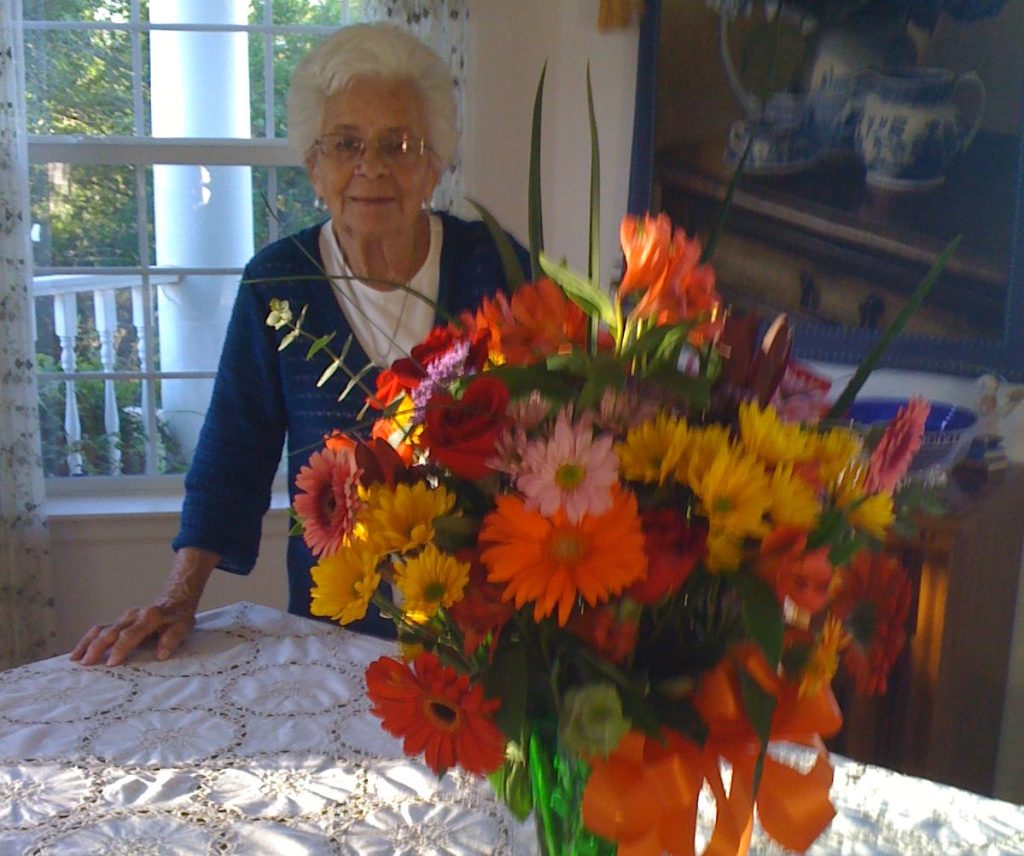
     

  • Reflections on the passing of my mother, the last of the “Great Generation” in our family.

    Reflections on the passing of my mother, the last of the “Great Generation” in our family.

    Reflections on the passing of my mother, the last of the “Great Generation” in our family.

    My mother, Janice Green, passed away at about 7 p.m. on October 30th, 2020.  She was 94.  The “cause of death” will be recorded as Alzheimer’s, with Covid as a contributing factor, but the real cause is that she felt free to go.

    A few weeks ago Marti and I began to feel that we should plan a trip back to Colorado, even though it was not clear if freedom to travel for “non-essential” purposes would continue.  We booked the flights and just before we left home, we learned that Mom had tested positive for Covid.  Although our family home in Mesa County Colorado has been almost Covid free, somehow the virus got into the very careful and caring nursing home where she and Dad have lived for a few years.  Dad passed away about 13 months before Mom.

    I have a younger sister and younger brother in Mesa County. My sister Charlotte has been visiting Mom daily, encouraging her, buying the things she needed (she regularly “needed” new clothes, even though she wasn’t able to go anywhere) and liaising with the nursing home.

    The day after we arrived, my older sister, Deyon, arrived from Texas.  Although we could not visit Mom because of Covid, Deyon did stop by the nursing home to look through the window, but Mom was not visible.  She had been unresponsive for several days. Over the previous five or six years, dementia had taken her ability to communicate and finally her comprehension.

    The next day we had a wonderful, warm time of fellowship with my brother, Greg and his wife, Debbie.  As we were leaving, Debbie, who has some expertise in neural science, explained that often the ability to hear remains even after other abilities have gone.  She suggested perhaps we should consider trying to communicate with her one more time to say what we thought was important.

    Greg and Debbie had appointments that afternoon, but Deyon, Charlotte, Marti and I all felt that Debbie had shared an important insight, so we went back to the nursing home.  This time, Mom was clearly visible from the window and one of the many excellent staff put a phone on speaker mode and held it close to Mom.

    Each of us had a turn telling her that we loved her very much, were so grateful for such an exemplary mother, letting her know that we were in warm family unity and that she should feel free to go be with Dad and all her loved ones in the place Jesus has prepared for us. It was one of those moments when we all thought, “God is so IN this act!”

    About three hours later we got the phone call saying she had taken her last breath at about 7 p.m. on the 30th of October.


    This is the obituary we prepared for Janice Green.


    Janice Green passed away October 30th in her 95th year, following her husband, Charlie, who died last year at the age of 96.  They enjoyed a full and fruitful life together, having four children, 15 grandchildren, 28 great grandchildren, and one great, great grandchild.  She left a family deeply grateful for her legacy of love, integrity, hardworking faithfulness and creativity.  For those familiar with the description, she was the incarnation of the Proverbs 31 woman.

    Janice was born July 14, 1926 in Logan, New Mexico to Arbie and Tuck Meeks, the fifth of six children.  Arbie had brought 2 children to the marriage and Tuck had brought four, so the total was twelve.  Janice attended schools in New Mexico, obtained a ministerial license, travelled as an evangelist and went on to Southwestern Bible College in Waxahachie, Texas, graduating with honours in 1944.

    She married Charles Green in June of 1944. Together they pastored in Texas, before moving to Colorado in 1946.  Four children were born to Charlie and Janice in Grand Junction: Deyon Stephens (Don), Lynn Green (Martha), Charlotte Pollard (Ron), and Greg Green (Debbie).

    Janice served as PTA president of Orchard Mesa Junior High; she taught Sunday School for many years; She was a talented musician in piano, organ, banjo, and guitar.  She contributed to the family income and taught her children well through her efforts in many projects like baking, raising chickens, turkeys, milk cows and sheep, growing fruit and vegetables, and sewing.

    Despite her initial fear of flying, she obtained her pilot’s license after her children were grown.  She learned general administration and bookkeeping skills, making payroll for Valley Construction, one of the businesses she and her husband ran together.  She occasionally flew supplies and payroll to outlying jobs in Farmington, New Mexico; Kemmerer, Wyoming and Cortez, Colorado.

    In 1975 Charlie and Janice completed the entry level training for Youth With A Mission in Lausanne, Switzerland. They returned to close their business and pioneer a Youth With A Mission training center in the Big Cimarron Valley, training scores of young people in Christian faith and life skills. They directed that ministry for 20 years, and then purchased El Rancho Cimarron,  a small family resort, which they operated for seven years. 

    In their late 70s, Charlie and Janice built a house on the Redlands of Grand Junction and returned to live there in 2003.  In 2012 they moved to the Atrium (assisted living).  As their health and strength declined they moved on to Larchwood Nursing Home, where they were well-cared for and loved by the excellent staff.

  • Disciples Who Make Disciples Makers

    Disciples Who Make Disciples Makers

    Photo by Dominik Leiner on Unsplash


    **This is a personal website and reflects my thoughts and convictions. It does not represent any official position held by Youth With A Mission.**


    I was on a Zoom call with Loren Cunningham a couple of days ago and he said he would sent me a copy of a very important comment Tom Hallas had made recently in a letter to Elisabeth Cochrane.  He felt it was an accurate, prophetic insight into God’s purposes for YWAM.  Here is what Tom wrote.

    I have always felt that the primary calling and anointing that God had endowed us with was to make disciples who would be disciple makers.

    Transformation starts internally and works out.

    There are many models of excellent practice right across the planet, many of which are designed and managed by agents of darkness. Striving for excellence on our own strength is useless.

    We are conversionist missionaries; we hold fast to the idea that the whole Cosmos is under the power of the evil one and that the primary service that we offer is a pathway out of darkness into His glorious light.

    For us, the warfare factor should be a top priority—knowing that the Son of Man was made manifest to destroy the works of the devil.

    We are coming into a new era where our primary tool for survival will not be the arrival at human excellence but sustained spiritual warfare. 

    Blessings, Tom Hallas

    I read this just before going to a prayer meeting.  We had set aside the whole night, if needed, so we would not be limited by a timeframe.   In the end, it was from 9 p.m. to 3 a.m.  It was a wonderful, productive, exciting, deep few hours in God’s presence and it served to underline what Tom has written.  We engaged in the spiritual warfare of listening to the Holy Spirit and praying the prayers he gave us.  We asked him to search our hearts and we put things right with him and others.  These are the weapons God has given us and as we teach others, who teach others, the world is changed.  (2 Timothy 2:2)

  • What is the Point of Prophecy?

    What is the Point of Prophecy?

    WHAT IS THE POINT OF PROPHECY?

    A well known Biblical verse, Amos 3:7, states “The Sovereign Lord never does anything until he reveals his plans to his servants the prophets.”

    Does that seem odd to you?  If the Sovereign Lord decides to do something doesn’t he just do it?

    I want to draw your attention to a prophecy which is well known, but to a limited number of Christians and I want to explain why more of us should know about it.  We should know about well-tested prophecies and we should believe them because that is how and why they come to pass.

    God tells his prophets to tell his people what he intends to do because he works through our faith.  Most prophetic messages are conditional. The very well-know passage from  2 Chronicles 7:14 is a perfect example:

    If my people, which are called by my name, shall ahumble themselves, and bpray, and seek my cface, and turn from their wicked ways; then will I hear from heaven, and will forgive their sin, and will heal their land.

    Here the Bible clearly states the conditions, and they are at least implied for nearly every prophetic passage.  The most common theme from the major and minor prophets is a warning about impending judgement with the prophet pleading for the people to repent and do what is right so God can relent and not bring the judgement they deserve.

    That is not to say that all prophecy is conditional, because some events are unconditionally predetermined.  An example of this would be the prophecy that Israel would be exiled in Egypt for 400 years.

    But most prophecies in the Bible, and prophetic messages today, are conditional.  This is because the Sovereign Lord has made us in his image and, as such, we are very significant.  We can create together with him!  Or as in Nazareth (Matt 13:58 or Mark 6:5), our unbelief can be a hindrance.

    God so loves us that he wants to work in partnership with us!  Therefore, he tells the prophets what he wants to do, they tell his people and we pray prayers of faith, like Daniel did in Daniel 9 or like Nehemiah did in Neh. 1

    So, it is clear that the Lord brings his word to us, often in the form of prophecies, so we can hear, believe and pray in faith.  That is how we can co-work together with God (1 Corinthians 3:9).

    That brings me to a prophecy that I think we should “lay hold of” and then pray until it happens.  It came from an unusual man, but one who was a well-proven prophet of his time.  God used him to bring thousands to faith, with signs and wonders accompanying his ministry over decades.  Smith Wigglesworth was a plumber but became a well-known evangelist.  The following prophecy and the photograph are taken from www.prophecytoday.uk.


    Photo: https://relevantmagazine.com/god/13-smith-wigglesworth-quotes-will-challenge-your-faith/


    Smith Wigglesworth was a well-known evangelist. He had humble beginnings in life, took up the trade of a plumber and was then powerfully used in a world-wide ministry of evangelism with miraculous healings and miracles accompanying the ministry of the word. He lived from 8 June 1859 to 12 March 1947.1

    Shortly before he died in 1947, he delivered the following prophecy:


    During the next few decades there will be two distinct moves of the Holy Spirit across the church in Great Britain. The first move will affect every church that is open to receive it and will be characterised by the restoration of the baptism and gifts of the Holy Spirit.

    The second move of the Holy Spirit will result in people leaving historic churches and planting new churches. In the duration of each of these moves, the people who are involved will say, ‘This is a great revival.’ But the Lord says, ‘No, neither is this the great revival but both are steps towards it.’

    When the new church phase is on the wane, there will be evidence in the churches of something that has not been seen before: a coming together of those with an emphasis on the word and those with an emphasis on the Spirit.

    When the word and the Spirit come together, there will be the biggest move of the Holy Spirit that the nations, and indeed, the world have ever seen. It will mark the beginning of a revival that will eclipse anything that has been witnessed within these shores, even the Wesleyan and Welsh revivals of former years.

    The outpouring of God’s Spirit will flow over from the United Kingdom to mainland Europe, and from there, will begin a missionary move to the ends of the earth.

    I believe this prophecy is from God and it is for now!

    There are many signs that we are about to see unprecedented numbers of people, especially young people, to come to faith in Jesus.  But the “biggest move of the Holy Spirit that the nations, and indeed, the wold have ever seen” is not a foregone conclusion.  Let us cling onto God’s loving intention and pray it into being!


    Lynn Green.