Live stream recorded on the 9 of September of 2022 at YWAM Harpenden Studios.
•
•
** This is a personal podcast and reflects my thoughts and convictions. It does not represent any official position held by Youth With A Mission.**

** This is a personal podcast and reflects my thoughts and convictions. It does not represent any official position held by Youth With A Mission.**
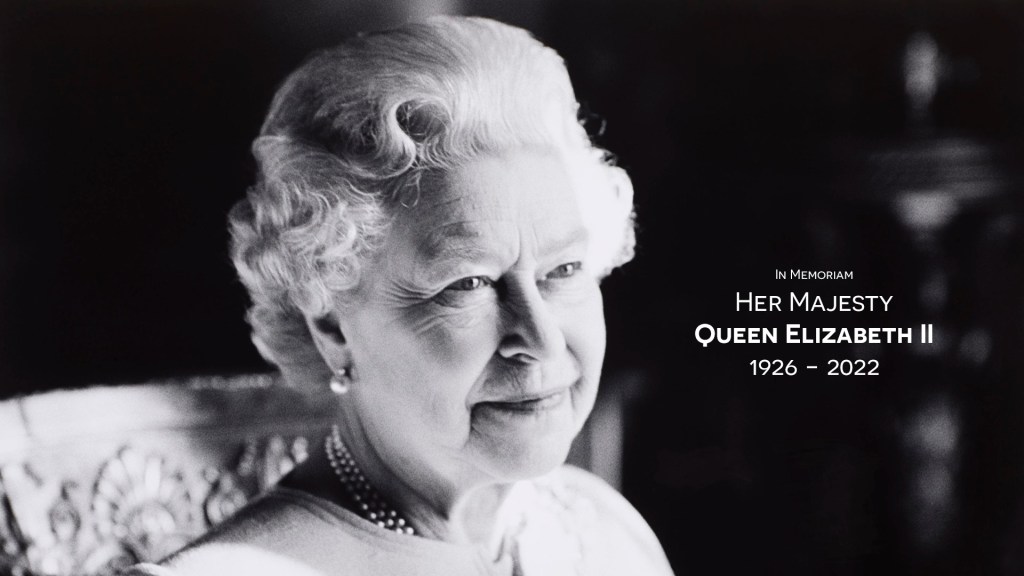
As we mourn the loss of our Queen, some are already referring to her as Queen Elizabeth the Great. Amen to that!
A have no doubt that she has joyfully entered into “life in the age to come” as Tom Wright translates it in the many New Testament passages that refer to eternity.
I have had many jumbled thoughts as I have attempted to think about the implications of her absence and the reign of King Charles III. Perhaps you have also experienced some deep emotions—I have. I didn’t expect to be so deeply moved.
Early this morning, I read the following column by Allison Pearson and concluded that she conveys many of the thoughts and feeling much better than I could, so here it is (from the Daily Telegraph).
Lynn
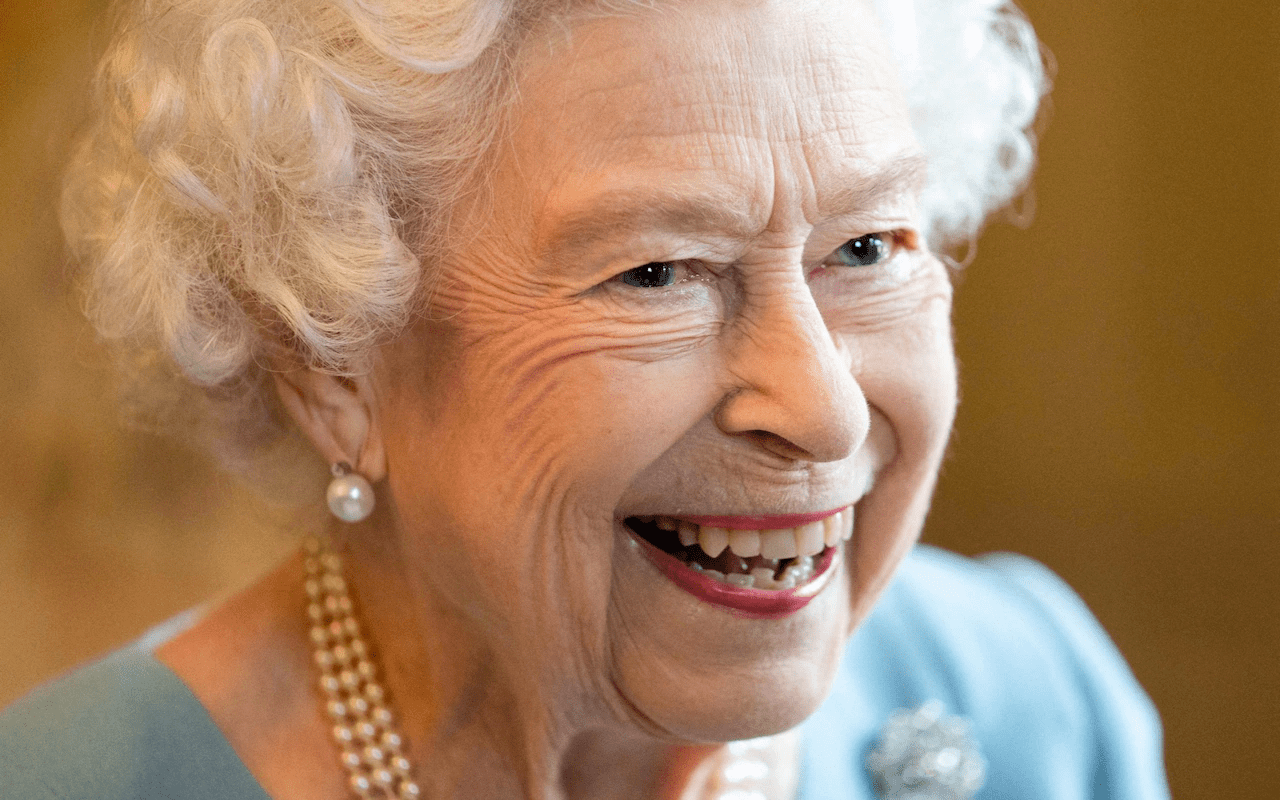
“I don’t have to believe it if I don’t want to.” That was how the novelist John O’Hara reacted when he heard that his friend, George Gershwin, had died.
Many of her subjects will have felt something similar at 6.32pm on Sept 8 2022, when we heard the seismic news that our Queen had left us.
It is unbearably sad. A loss almost too great to process. But, as the Queen said in a message of condolence to the families of British victims lost in the 9/11 terrorist attack: “Grief is the price we pay for love.”
How are we supposed to manage without her? Who are we without her? She has always been there – a still point in a tumultuous world; the clock face over which the hands of time revolved for as long as anyone could remember. Her Majesty’s first prime minister was born in 1874, her last almost exactly a century later in 1975.
Her long life, the home movie of our history; her face, the screensaver of the United Kingdom; a diadem in the national firmament; the stamp on every letter; the silhouette of the national self. Our Queen. Of course, we knew that she was very old and we knew how the story had to end. “Mobility issues” was palace-speak for the fact that our longest-reigning monarch, who put one sturdy foot in front of the other like the fell pony she rode every day until remarkably recently, was waning.
But there she was on Tuesday at Balmoral – frail, yes, but welcoming her 15th prime minister with the most wonderful smile, immaculate in a grey tartan skirt and pearls. Everything must have been shutting down by then, but duty, her irreducible core, would be the last thing to go. “It is a job for life.” That’s what Princess Elizabeth said when she lost her beloved father in 1952.
And it was. She was our Queen until the moment of her death and, God knows, we could not have wished for a better one.
Did we come to believe she was immortal? I think we probably did in some weird way, because losing something that permanent is impossible for the mind to comprehend, like the moon going out or the stars packing up.
There was a sense, never articulated, that, as long as the Queen was there, things would somehow be alright. I’m so glad Her Majesty made it to her Platinum Jubilee earlier this year and the British people got the chance to show her, for one last time, how much she was adored. That great, beaming throng which surged down The Mall towards the palace, surfing a wave of joy, and the millions of us watching at home, were united in wanting to thank the Queen, to celebrate everything she means – everything she meant to us. Oh Lord, that past tense is going to take some getting used to.
What sweeter memory could there be than the snowy, venerable and deliciously playful monarch taking tea with Paddington Bear, producing a triumphant marmalade sandwich from her handbag? It was a shock to realise what a good actress she was, but it shouldn’t have been.
She had been playing a hugely difficult part since 1953.
“The Crown is an idea,” she once said, “not a person.”
Quite right, ma’am, but history has thrown up many unworthy custodians of that idea. Elizabeth II, in an act of self-abnegation almost unimaginable to the modern mind, embodied it to perfection.
Who summed up her remarkable reign best? Philip Larkin came close when he was asked to produce a poem for the Silver Jubilee:
“In times when nothing stood
“But worsened or grew strange
“There was one constant good
“She did not change.”
People will feel so strange now, discombobulated, tearful – I am crying as I write; can’t help it – and maybe a bit scared. A great oak has fallen and the baffled eye struggles to adjust to the new landscape.
Even hearing an ashen Huw Edwards say the word “king” was a shock. Not yet, please, not yet.
At such a devastating time, the country could always rely on our Queen for comforting words and reassurance. What would she have said to help us bear her loss?
I think the address she gave to the nation in 2002, after her mother died, holds a clue as to how she would wish us to react: “I hope that sadness will blend with a wider sense of thanksgiving, not just for her life, but for the times in which she lived – a century for this country and the Commonwealth not without its trials and sorrows, but also one of extraordinary progress, full of examples of courage and service as well as fun and laughter.
“I thank you from my heart for the love you gave her during her life and the honour you now give her in death. May God bless you all.”
Our Sovereign Lady, Queen Elizabeth II, Defender of the Faith, is with her God now, his humble servant in whom He should be well pleased.
Filled with sorrow and with gratitude, we will never forget her. How very lucky we were in our Queen. One constant good.
Ad maiorem Dei gloriam.
**This is a personal website and reflects my thoughts and convictions. It does not represent any official position held by Youth With A Mission.**
A good friend of mine died yesterday. Cancer cut his life short though he was praying and believing for healing right up to the last day. I will miss him a lot, but the hole left by his departure is much greater for his wife and four children. Both yesterday and today I have been coming to grips with this unwelcome event and, in the process, I came across this article that I wrote a few years ago. It seems odd that something I wrote many years ago could minister to my hurting soul today, but it’s true, so here it is:
On a recent global day of prayer, I had to get a visa from the Consulate for India in London. I was so sorry to miss prayer with our community at Highfield Oval, but found a quiet garden along the bank of the River Thames in central London.
As I walked and prayed, I thought about those YWAMers who have died over the years and the fact that more will lay down their lives in days to come. I also began to grapple with thoughts that are hard to put into words, but I suspect others have similar thoughts;
Many of our deaths have been due to traffic accidents and others have been from the most common fatal illnesses. As I walked and prayed in the garden, I came upon a memorial to William Tyndale and this is what it says:
Tyndale is reconised as one of the great martyrs in Christian history, but I wondered if his contemporaries thought that way? How did his family feel? The idea of having the scriptures available in the common language was scandalous at that time and heavily apposed by the clergy throughout Europe. In 1536 he was convicted of heresy, strangled and his body burned.
With 500 years of hindsight, we have no doubt that he was a martyr. But what about the so-called accident or the fatal illness contracted on the mission field? After grappling with this in prayer and thought, I am convinced that all whose lives comes to a premature end while they are in the course of obeying Jesus as missionaries can be considered to have given their lives for the sake of the gospel.
As YWAM leaders we need to dig into this question still further. What do we think about those who might have taken unnecessary risks? For example, the person who ventures into the surf knowing they can’t swim very well, or the one who takes a mode of transportation that is known to be extremely dangerous, or the one who is habitually a dangerous driver. When a YWAMer or any Christian worker loses their life under that sort of circumstance it is particularly difficult. We have a responsibility to do all we can to protect our workers from unnecessary risk and yet it is so easy to become fearful and over controlling in our efforts to protect our staff and especially our students.
Many years ago, I was in Cyprus when I received a phone call saying that a newly married Swedish couple who were students on our DTS had been kidnapped in Dagestan. When I heard that news I was both fearful and angry. To me, it was indefensible that any YWAM leader would allow DTS students to go on outreach in a country about which it was said;
“the largest single source of foreign currency is ransoms from kidnappings”.
When I phoned leaders who were nearer the situation I began to learn a remarkable story about a young couple who had been interceding for Dagestan for many years, and whose parents and home Church had sent them to the DTS with the expectation that they would go to Dagestan, and were themselves convinced that whatever happened to them in that country, they had gone there in direct obedience to God. As it turned out they spent several months in captivity, but were remarkably strengthen by the power of the Holy Spirit and have a powerful testimony to tell. What I felt was an unacceptable risk was actually detailed obedience to God’s leading.
That story illustrates the only solution to our dilemma. We must be obedient servants. As we go into all the world to preach the gospel there will be more illness and more lives will be laid down. We are praying for more protective cover from heaven and we are not encouraging anyone to take risks just for the sake of adventure. But we will not shrink back from the challenging parts of the world. Those who are walking in obedience and lay down their lives are following in the steps of the generations of martyrs.
As we consider this subject it provokes us not only to pray for more protective cover from heaven, but also that we might become more sensitive to God’s voice. One of YWAM’s cornerstone teachings is that God speaks and His people hear His voice. It was no accident that the Lord led Loren to write the first YWAM book on that subject, “Is that really you, God?”. Sometimes, though, we get so focused on strategies, travel advisories from various embassies and foreign offices, the cost of tickets and other practical issues that we squeeze out God’s voice and replace it with our own thinking. God has deeply convicted me of that over the past couple of years and I am on a journey to increase my sensitivity to the leading of the Holy Spirit.
It has been like retracing my first couple of years with YWAM except I have to do it at a deeper level with more repentance and brokenness. I realize that I have let my experience and wisdom replace God’s voice in far too many of my decisions. Of course, it is obvious that no matter how much I learn or how much I study the word of God and understand His ways I will never have a fraction of God’s insight and knowledge. So it always makes sense to listen to Him and “lean not to my own understanding”.
I was much more determined to hear from God when I was just starting in service overseas because I constantly felt out of my depth, had no experience and often no one else to turn to for counsel, but with experienced wise counselors and an increasing knowledge of God’s word I became more self-reliant. Now I have to repent of that pride very regularly and break old habits that are deeply entrenched.
There is another reason why I have strayed away from the simple path of hearing and obeying. All of us know that the word of the Lord is not nearly as clear to us as it seems to be to some of the Biblical characters, who recorded extensive dialog with God. It is easy to make mistakes about what God is saying and that forces us to walk in deep humility. Of course, our pride doesn’t like that, so soon we stop asking God and begin to believe that He does not speak as clearly as He used to speak to His people. Or perhaps we think for some reason that He doesn’t speak clearly to me. I used to have all kinds of reasons why I thought God did not speak as clearly to me as He does to some people. In the end I see all those as a system of unbelief, so I have found myself repenting almost daily of unbelief as well as pride.
I am happy to report that I am hearing God more clearly then I’ve heard for many years and our various leadership gathering are increasingly dependent upon listening to God together and taking seriously each person’s understanding of what God is saying.
I am convinced that throughout YWAM we need to return to this cornerstone of God’s ways. Jesus said “My sheep hear my voice and they follow me”
So to sum up I believe we will see more protection and authority in the battle to take the gospel to the ends of the earth. As we have prayed and continue to increase our prayer cover, we will become more effective and less vulnerable. But there will still be suffering and there will still be martyrs in the course of the gospel. However, as we return to our deep commitment to listen and obey, we can share in the comfort as the apostle Peter wrote to the early Church in the midst of its suffering;
“Therefore, let those also who suffer according to the will of God entrust their souls to a faithful Creator in doing what is right”. 1 Peter 4:19 (NASB)
Lynn Green.
 Lynn Green