**This is a personal website and reflects my thoughts and convictions. It does not represent any official position held by Youth With A Mission.**

**This is a personal website and reflects my thoughts and convictions. It does not represent any official position held by Youth With A Mission.**

**This is a personal website and reflects my thoughts and convictions. It does not represent any official position held by Youth With A Mission.**
A few weeks ago, I said that I would post another of Dr Atef’s wonderful thoughts on prayer. If you did not read those, then it would help if you know that he is Egyptian by birth and spent several decades as a “Celibate Priest” in Egypt. Much of that time was spent in prayerful seclusion. In recent years, the Lord directed him to relocate near to his sister in Arizona. Then her husband died and Dr Atef’s assistance was of vital importance. In the meantime, he was received into the Orthodox Church of North America and many men and women of all ages gathered round him to form a prayerful community. It is my great privilege to see him from time to time. I was there in December and he will pay a short visit to Highfield Oval, with two teaching sessions on Friday evening, March 31st, 2019. The sessions will be open to guests.
The title I have given this is a little misleading because the notes are about more than redirecting hunger, but they do show important insight into our longings and hunger. For example:
“The body and soul of the human being longs for sex and for being united with the other. The world makes him/her constantly hungry, never having enough of this greatest pleasure.”
He then goes on to write about how that hunger after that which will never satisfy can actually be filled by fellowship with God. These notes are worth meditating upon.
Click on the link below to read the Dr. Atef notes Transforming Prayer.

**This is a personal website and reflects my thoughts and convictions. It does not represent any official position held by Youth With A Mission.**
Join me in celebrating my 43rd birthday! I woke up this morning feeling so energetic and fit that I decided that is what I am—43 years old.
Never mind that I have some numbers and words written on a birth certificate that says I am in my 71st year. Those are just scribbles on paper. I choose to self-identify myself 43 because that is what I feel. I haven’t had any heart arrhythmia issues for 6 months, my energy levels are up and I feel great. I am really grateful for that, so I would like everybody to join in with me to celebrate my 43rd birthday.
You may think that I am just making a feeble joke here and perhaps I am. On the other hand I was thinking about the 69 year old who has been in the papers recently. He is taking legal action to get his original birth date changed so that he can legally be 49 on his tinder profile, because he is not attracting young enough women to his site. He figures if he is 49 then more younger women will read his profile. Good luck with that, Mister!
AM I JUST BEING SILLY?
The thing is, most people read that in the newspaper or online and they think it’s silly and dismiss it. But is it that easy?
Here is the big question: why do we not take that seriously, but we feel we must take it seriously when a person, who is male, self-identifies as female or a female identifying as male.
What is the reasonable basis for making a distinction? I am not trying to alienate anybody here; I just want to know how we, as a society based upon law, can make a distinction. Is it because one seems frivolous, superficial and self-interested but the other must be sincere? How can we know who is sincere and who is not. More importantly, how can the law decide that. How can society decide that? What is the basis?
I am really serious about this; it is an issue of great importance to those of us who live in Western democracies. Do we have any grounds for over-ruling feelings that are sincere and deeply held without doubt? Why do we feel we must take gender dysphoria seriously but not age dysphoria? On what basis do we think that?
I’M NOT INTENDING TO OFFEND
I know that writing about this is going to seem offensive for some people, but the trouble is we have been assuming feelings are more important than more objective reality for a long time. I can say that my birthday was assigned to me by the medical profession, so it’s only a date when they say I was born. Or I can say that my biological gender was assigned to me at birth. But actually both my date of birth and my sex are objective realities. There were many people who could witness that I was born a male on April 14, 1948.
Some people claim that the sex of a baby is often not clear, but that is not true. There may be one child in 5000 where gender is not clear at birth. Even then, the chromosomes are almost always clear one way or another. Gender, or more accurately sex, is not assigned at birth, it is observed.
IF I AM SUFFICIENTLY SINCERE, IS IT TRUE?
Let me hasten to say that I am not suggesting here that we don’t take it seriously and compassionately when a person feels their body sexual identity does not match their feelings about their gender. But neither can we simply agree that the greater truth will always be in their self-identity. This purely subjective approach to truth will not work for us. We won’t be able to live with it. If we decide that deeply-held beliefs trump observed reality, we will unleash chaos. Such an approach would require our courts to decide whether or not someone holds a particular belief about themselves deeply enough to let it take precedence over objective realities. And that would be entirely unworkable.
Many humanities courses in our Universities have promoted this subjective approach to truth for several decades and now we are experiencing consequences. It is based on the philosophical idea that objects cannot generate truth; truth “is in the eye of the beholder”. In other words, reality is what we perceive it to be. There is some truth in that, but by carrying that idea to the extreme we end up with an unlivable world. When each person decides what is true for themselves, nothing is true.
HOW CAN WE KNOW?
Is there a way out of this? Of course! There was a time when it was assumed that all truth came only by revelation, so art and philosophy centered round revelation from God. There is some truth in that too, but it is insufficient.
Then we gradually transitioned into a new epoch in which people decided that all reality has to be determined by the scientific method. That is, anything that is true must be verifiable by objective means: experiments must be possible and the resulting data will prove or disprove the proposed truth. That method is also insufficient. It can often tell us “what or how” but it cannot tell us “why”.
As a Biblical Christian, I believe in revelation and I also believe in the great value of the scientific method. When we put those two together, we have a means of knowing what is true. Human beings can still receive revelation from God. As the philosopher, Dr Francis Schaeffer said in the title of one of his books, “He is There and He is Not Silent”. We have also expanded our knowledge hugely over the past two centuries by using the scientific method. We put those two together and we have a basis for truth that we can live with.
TRUTH IS LIVEABLE
All philosophies for life, or presuppositions, have to be evaluated by living them. Post-modern, relativistic thinking leads to chaos. Religious tyranny springs from claims that all truth comes only by divine revelation. The scientific method alone provides no answers to the really big issues of life. We must regain confidence in the idea that there are universal truths and then live by them.
So am I 43? Well, on another day I might feel like I am 78, so I will just go with the numbers on my birth certificate. I’m nearer 71 than 70 and I’m just very grateful for the health and energy I am experiencing.
Lynn Green.
**This is a personal website and reflects my thoughts and convictions. It does not represent any official position held by Youth With A Mission.**
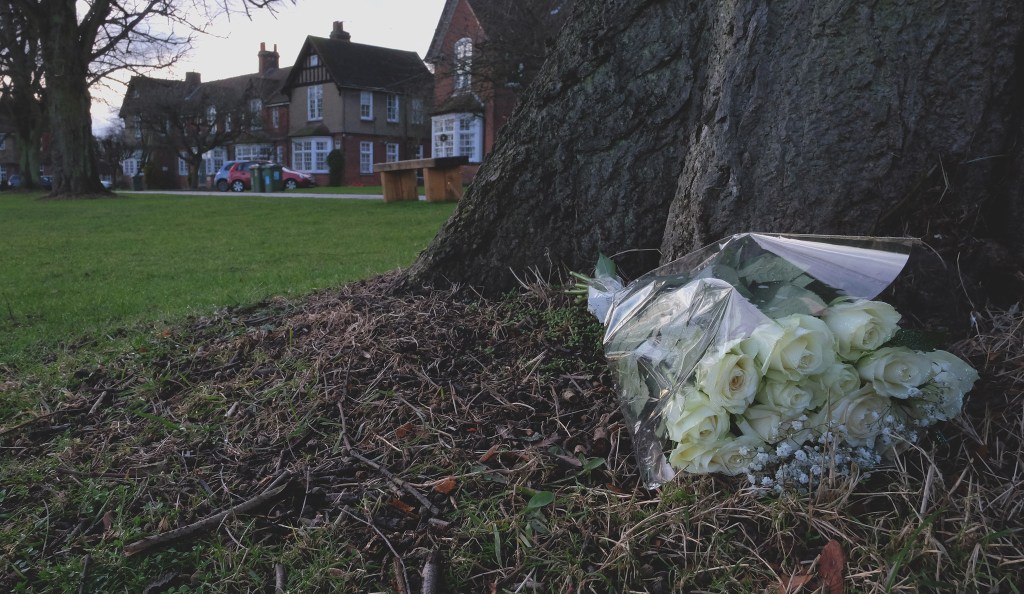
A good friend of mine died yesterday. Cancer cut his life short though he was praying and believing for healing right up to the last day. I will miss him a lot, but the hole left by his departure is much greater for his wife and four children. Both yesterday and today I have been coming to grips with this unwelcome event and, in the process, I came across this article that I wrote a few years ago. It seems odd that something I wrote many years ago could minister to my hurting soul today, but it’s true, so here it is:
On a recent global day of prayer, I had to get a visa from the Consulate for India in London. I was so sorry to miss prayer with our community at Highfield Oval, but found a quiet garden along the bank of the River Thames in central London.
As I walked and prayed, I thought about those YWAMers who have died over the years and the fact that more will lay down their lives in days to come. I also began to grapple with thoughts that are hard to put into words, but I suspect others have similar thoughts;
Many of our deaths have been due to traffic accidents and others have been from the most common fatal illnesses. As I walked and prayed in the garden, I came upon a memorial to William Tyndale and this is what it says:
Tyndale is reconised as one of the great martyrs in Christian history, but I wondered if his contemporaries thought that way? How did his family feel? The idea of having the scriptures available in the common language was scandalous at that time and heavily apposed by the clergy throughout Europe. In 1536 he was convicted of heresy, strangled and his body burned.
With 500 years of hindsight, we have no doubt that he was a martyr. But what about the so-called accident or the fatal illness contracted on the mission field? After grappling with this in prayer and thought, I am convinced that all whose lives comes to a premature end while they are in the course of obeying Jesus as missionaries can be considered to have given their lives for the sake of the gospel.
As YWAM leaders we need to dig into this question still further. What do we think about those who might have taken unnecessary risks? For example, the person who ventures into the surf knowing they can’t swim very well, or the one who takes a mode of transportation that is known to be extremely dangerous, or the one who is habitually a dangerous driver. When a YWAMer or any Christian worker loses their life under that sort of circumstance it is particularly difficult. We have a responsibility to do all we can to protect our workers from unnecessary risk and yet it is so easy to become fearful and over controlling in our efforts to protect our staff and especially our students.
Many years ago, I was in Cyprus when I received a phone call saying that a newly married Swedish couple who were students on our DTS had been kidnapped in Dagestan. When I heard that news I was both fearful and angry. To me, it was indefensible that any YWAM leader would allow DTS students to go on outreach in a country about which it was said;
“the largest single source of foreign currency is ransoms from kidnappings”.
When I phoned leaders who were nearer the situation I began to learn a remarkable story about a young couple who had been interceding for Dagestan for many years, and whose parents and home Church had sent them to the DTS with the expectation that they would go to Dagestan, and were themselves convinced that whatever happened to them in that country, they had gone there in direct obedience to God. As it turned out they spent several months in captivity, but were remarkably strengthen by the power of the Holy Spirit and have a powerful testimony to tell. What I felt was an unacceptable risk was actually detailed obedience to God’s leading.
That story illustrates the only solution to our dilemma. We must be obedient servants. As we go into all the world to preach the gospel there will be more illness and more lives will be laid down. We are praying for more protective cover from heaven and we are not encouraging anyone to take risks just for the sake of adventure. But we will not shrink back from the challenging parts of the world. Those who are walking in obedience and lay down their lives are following in the steps of the generations of martyrs.
As we consider this subject it provokes us not only to pray for more protective cover from heaven, but also that we might become more sensitive to God’s voice. One of YWAM’s cornerstone teachings is that God speaks and His people hear His voice. It was no accident that the Lord led Loren to write the first YWAM book on that subject, “Is that really you, God?”. Sometimes, though, we get so focused on strategies, travel advisories from various embassies and foreign offices, the cost of tickets and other practical issues that we squeeze out God’s voice and replace it with our own thinking. God has deeply convicted me of that over the past couple of years and I am on a journey to increase my sensitivity to the leading of the Holy Spirit.
It has been like retracing my first couple of years with YWAM except I have to do it at a deeper level with more repentance and brokenness. I realize that I have let my experience and wisdom replace God’s voice in far too many of my decisions. Of course, it is obvious that no matter how much I learn or how much I study the word of God and understand His ways I will never have a fraction of God’s insight and knowledge. So it always makes sense to listen to Him and “lean not to my own understanding”.
I was much more determined to hear from God when I was just starting in service overseas because I constantly felt out of my depth, had no experience and often no one else to turn to for counsel, but with experienced wise counselors and an increasing knowledge of God’s word I became more self-reliant. Now I have to repent of that pride very regularly and break old habits that are deeply entrenched.
There is another reason why I have strayed away from the simple path of hearing and obeying. All of us know that the word of the Lord is not nearly as clear to us as it seems to be to some of the Biblical characters, who recorded extensive dialog with God. It is easy to make mistakes about what God is saying and that forces us to walk in deep humility. Of course, our pride doesn’t like that, so soon we stop asking God and begin to believe that He does not speak as clearly as He used to speak to His people. Or perhaps we think for some reason that He doesn’t speak clearly to me. I used to have all kinds of reasons why I thought God did not speak as clearly to me as He does to some people. In the end I see all those as a system of unbelief, so I have found myself repenting almost daily of unbelief as well as pride.
I am happy to report that I am hearing God more clearly then I’ve heard for many years and our various leadership gathering are increasingly dependent upon listening to God together and taking seriously each person’s understanding of what God is saying.
I am convinced that throughout YWAM we need to return to this cornerstone of God’s ways. Jesus said “My sheep hear my voice and they follow me”
So to sum up I believe we will see more protection and authority in the battle to take the gospel to the ends of the earth. As we have prayed and continue to increase our prayer cover, we will become more effective and less vulnerable. But there will still be suffering and there will still be martyrs in the course of the gospel. However, as we return to our deep commitment to listen and obey, we can share in the comfort as the apostle Peter wrote to the early Church in the midst of its suffering;
“Therefore, let those also who suffer according to the will of God entrust their souls to a faithful Creator in doing what is right”. 1 Peter 4:19 (NASB)
Lynn Green.
 Lynn Green