Category: Uncategorized

  • SHOULD YWAM EXIST?

    SHOULD YWAM EXIST?

    **This is a personal website and reflects my thoughts and convictions. It does not represent any official position held by Youth With A Mission.**

    Local Churches and Missions Agencies: Competitors or Partners?

    YWAM

    One of my sons and his wife attend a very good local church, one that has provided a spiritual home for this former YWAMer, a place to grow and exercise their spiritual gifts and to find friendship with like-minded Christians.  I am delighted with the church they have found and recently attended, along with other members of my family, a very good Sunday meeting there.

    But his loyalty was tested a bit by a recent article in the magazine that is produced by the network that his church belongs to.  In it, an author made an argument for all mission agencies and other “para-church organizations” to close down because they are a hindrance to the health of the Church.  That old argument gets re-cycled every few years and I will come back to it later in this article.

    Not long after that I spoke with a friend of mine who told me about a book that was recently co-authored by a YWAM leader in which he apparently says that he sees no reason why he or other YWAM staff and students should attend church.  I haven’t managed to get a copy of the book yet, so I won’t comment on the book itself, but the subject clearly needs to be addressed because that is a violation of one of the foundational values of YWAM.

    I am not surprised that this tension between local churches and mission agencies continues to surface from time to time, because the healthy cooperation of local church and global mission is a major threat to the kingdom of darkness.  So I think it is important to lay a foundation of Biblical and historical thinking for the existence of these two major branches of the Church and why their partnership is so important and has such potential for power.impressive church
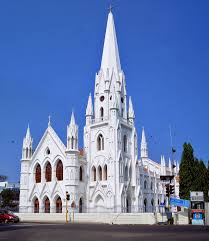
    Any discussion on this subject must begin with an attempt to define what church is.  This undertaking is fraught with pitfalls and ambushes because no subject has created more division in the history of Christianity.  Nevertheless, here is my attempt!  “The Church is people obeying Jesus together.”  My friend, Roger Forster, Bible scholar, teacher and apostolic leader gave me that definition many years ago and I have not heard anyone improve on it.

    Our tendency, however, is to add conditions and especially organizational or structural prescriptions to that definition—and  that is when we begin to take sides and argue with each another.  When you stop to think about it, many denominations are founded upon some prescription about how the Church is meant to be organized.  Should it have elders or just pastors and deacons? Should it have bishops, archbishops and synods or is each local church sovereign?  Should local churches be governed by all-male leadership teams, or can women exercise governmental authority?  Should the entire congregation participate in important decisions or should the elders or pastor make those decisions?  Is the pastor subject to the elders or the elders subject to the pastor?  The list of issues is probably endless and periodically another movement emerges with a “new revelation” about how church should be organized or structured.  They usually think, by implication, that all other expressions of the Church are, at best, second rate.

    There is a reason why we have so many different opinions on this subject.  Jesus specified almost nothing about how the Church should be organized.  Then, when we read the narrative about how the disciples went about “doing Church”, there aren’t many instructions.  We read the stories in the book of Acts and then the letters to the churches, but we don’t get very many commandments about how to organize the Church.

    I think there is a very important reason for that:  The Church is about people obeying Jesus together, not about how it is organized.  All organization is para-church.  (Para means alongside, so para-church means something that works alongside church.)  I believe God meant the Church to be adaptable to all cultures and all stages of social development so He designed great flexibility into how the Church can be structured.  In some times and some periods of history, vast congregations can be very fruitful with their large buildings and complex staff and management structures.  At other times, small groups meeting in homes, linked together by traveling pastors or teachers have been the most effective structure.Chinese Bible Study

    Any time people try to do anything together, some organizational structure is required.  But the nature of that structure is not the essence of the Church.  People obeying Jesus together is the essence of the Church.  Structure is simply meant to serve the Church’s purposes.  In fact structure is always at its best when it is pragmatic and flexible.  When we get hung up on structural prescriptions, history suggests that the structures become idolatrous and hinder the growth and maturity of God’s people and more often than not, become a source of division in the Church.

    To state it even more clearly, you are in the Church and I am in the Church, not because I go to a particular kind of organization.  We are being Church when we obey Jesus together.  We cannot be so arrogant as to say that one kind of structure is “better church” than another because of the way it is organized.  It is “good church” when it helps people come to faith in Christ, grow into maturity and express the life of Christ to the world.  Organizational structures that help achieve that end are good.  Organizational structures that hinder that end should be changed.

    We might picture it like this:  The way we organize a group of believers can be compared to the scaffolding set up around a building in need of repair.  The scaffolding enables us to strengthen and renew the building where ever it is required but the scaffolding is not the building.Bible Study

    Having said all that, though, the world-wide Body of Christ down through history has been expressed in two broad streams that have quite different organizational structures.  Their structures are different because their purposes are different.  We probably see them most clearly in the scriptures in Acts 13 when the Holy Spirit instructs the prophets and teachers at the church in Antioch to “set apart Barnabas and Saul for the work to which I have called them.”

    From that time on they traveled as a team—sometimes a large team and sometimes a small team—preaching the Good News, establishing churches, strengthening them but working within a team structure rather than the organization of any one local church.  They were often temporarily within a local church as they built it up, but then they moved on in their team.

    Some would say that they remained submitted to the leadership of the church at Antioch, but there is scant evidence for that given the fact that Paul returned to that city and church only twice over the next 20 years and any leadership communication to and from the church in Antioch would have been almost impossible

    From New Testament times, God’s people have been found within two broad streams, local churches and trans-local organizations such as evangelistic associations, mission agencies, aid agencies etc.  In the Roman Catholic and Orthodox expressions of the Church, parishes and orders have existed from the fourth century.  It is important to note that the protestant reformation did not have a significant trans-local (or extensive) expression for the first 200 years.  During that time it did not grow beyond the geographical confines of Europe.  Then, with the advent of denominational mission agencies and then interdenominational agencies, protestant Christianity has grown dramatically around the world.  Today, many very large local churches, sometimes called super-churches, are initiating mission’s efforts from their own congregations.  Like Youth with a Mission four or five decades ago, they are new, have great potential and will learn a lot.  YWAM and other agencies should welcome this development, and offer partnership where ever we might be of assistance.

    Toward the end of the 19th century, a dynamic spiritual renewal movement emerged and became know as the Brethren.  Like many other renewal movements, they emphasized certain organizational characteristics (lay leadership, plural eldership and local church sovereignty) and taught that the only valid organizational expression of the Church was local churches of their particular type.  Although their movement is not numerically strong in the 21st century their ideas about the structural nature of the Church have been widely influential.  As a result, many Christians today have been taught that only local churches are Biblically legitimate and that all other organizational expressions of the Church should be disbanded.

    Although this view claims a Biblical rationale, any effort to find prescriptions for Church organization in the Bible will quickly cast doubt on the validity of any and all expressions of the Church today.  Although it is fair to say that the Bible does not describe anything like today’s missionary societies, neither does it describe the existence of many different local churches within a given town or city, or denominational structures, or networks of churches, or Bible training colleges, or even church buildings…the list goes on.

    I will summarize all this by saying that the Church today, as throughout history, has a very wide range of organizational expressions, but they fall into two very broad categories:  those whose aim is to work out the Christian faith locally and those who aim to spread the Good News to new places around the world.  Given that these two broad streams exist, the important thing is how they serve one another.

    The Church is always at its best when the local churches send their best to take the Good News to what the Apostle Paul referred to as the “regions beyond”, and when the extensive expressions of the Church focus on establishing and strengthening local churches.  This partnership is the one that God has chosen to change the entire world!small church

    So that is why it is important that YWAMers and any other members of Christian organizations should be active members of local churches.  Even though their travel schedules and other ministry obligations might limit their participation, they should demonstrate a sacrificial commitment to the health of their local church.  Their faith should be expressed in the place where they live through a local body of believers.  And that sacrificial service should, hopefully, make it easier for local church leaders to see the importance of sending those who are called out from their church to world mission.

    YWAMers have no reason to be unsettled by those who question the validity YWAM.  But we also have no excuse to not be committed to a local body of Christians!
    Lynn Green
  • Mugged by an Apology

    Mugged by an Apology


    **This is a personal website and reflects my thoughts and convictions. It does not represent any official position held by Youth With A Mission.**

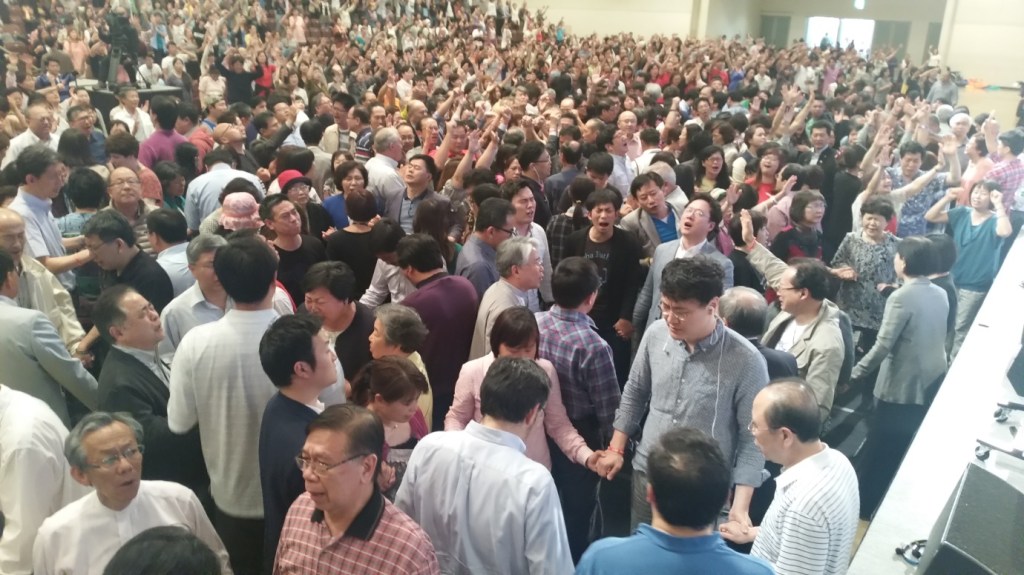
    A few people have asked for a copy of the covenant that was made between Japanese, Korean and Chinese church leaders when we were in Japan a couple of months ago, so I have copied it below.  It was only possible because we were in a spiritual atmosphere where all our hearts were softened by God’s presence.  We were experiencing the joy of family love, which is a gift from the Holy Spirit.  I suppose it might have been made possible by other means too.  If we had gathered to review the history of conflict  (and that would have taken many days) and if that review had been done in a spirit of honesty and deep humility, we might have come to a point of trust that was deep enough to risk an act of reconciliation.  But there is always the risk of adding further offense if any part of the process is flawed.

    I will come back to that, but first, here is the covenant that was made:

    “On this day, May 4th 2015, people from 31 nations gathered to worship and obey God. Father God called His people together as family. Chinese, Japanese, and Korean believers agreed to a binding contract that they will love, honour and uphold one another for the sake of the nations. Each agreed that they would no longer allow the pain of past events to blind them to the pain of the other. In mutual contrition and forgiveness they embraced one another in covenantal love initiated by the Holy Spirit. This alignment of God’s people restored authority and power in the heavenlies.

    They returned to their mother countries and the many nations where they live, determined with the power of the Spirit to remain connected in love. That love will not be swayed by politics, media or any other divisive influence. Rather, their love for one another will spread to all believers that God may bless their nations and give them peace.”

    Just a few weeks later, a Chinese person contacted me to ask some questions.  She had been in a meeting with a few Japanese and Koreans where the goal was reconciliation between the three peoples represented.  But she came away from the meeting having to work hard to not be offended at the way she was treated.  So what went wrong?

    Actually it reminded me of a funny conversation I had with a nationally recognised leader of Afro-Caribbean churches some years ago.  There was a period of a couple of years in the 1980s when we seemed to be “discovering” reconciliation and there was a lot of dialogue between Christians about slavery.  There had been race riots in Liverpool, Bristol and London and these were three of the cities that had prospered, at least partially because of the slave trade two centuries earlier.   I was in meetings where the Holy Spirit had worked deeply and there were tears and apologies and forgiveness.  But not all reconciliation attempts were successful.  The Afro-Caribbean leader said,  “If one more white Christian stands up in a meeting and asks me to forgive him for slavery, I will punch him on the nose!”

    We talked further and I understood what he was saying.  Apologies that cost nothing mean nothing.  In fact, they can turn out to be another offense.

    My Chinese friend felt that she was expected to forgive the Japanese people who stood before her, but she wasn’t ready.  She had a lot of questions about what they understood in relation to the Japanese occupation of China during the Second World War.  She wondered if they understood what a deep wound that was in the identity of the Chinese people.  She also needed time to think about the implications.  Maybe some of her family members would hear that she had expressed forgiveness to Japanese people and they would be angry at her for doing that.  There were many thoughts running through her mind.

    Unfortunately, she had a Japanese person kneeling before her and asking forgiveness and there was a small crowd of people waiting for her answer.  She had to say “You are forgiven.”  But, didn’t seem right to her and she left the meeting deeply conflicted.  She had been mugged by an apology!

    Reconciliation within the Body of Christ is vital and it is one of the main things that the Holy Spirit is doing today, but there are a few principles that, if adhered to, will make reconciliation deep, meaningful and lasting.  The first one is this:

    If we feel we are to apologise for an historical offense, the person whose forgiveness we are seeking must be able to feel that we are an appropriate representative of the offending people and that we understand the issues and that our apology has cost us something.

    Well that is a start on an important and interesting subject.  But this is long enough.  More later.

  • Is it illegal for me to say what I believe?


    **This is a personal website and reflects my thoughts and convictions. It does not represent any official position held by Youth With A Mission.**

    A Christian family bakery in Northern Ireland decided that they could not, in good conscience, decorate a cake with a slogan that promoted homosexual relationships.  They were sued and lost their case this week and that provides the occasion for publishing this blog. The picture of Bert and Ernie, with its slogan is what they would not produce on the cake.

    Phobia means fear.  I am neither afraid of homosexuals, nor of homosexuality.  So, I guess I am not homophobic.

    So,therefore I must be in favour of same-sex marriage; I must think that homosexual relations are to be admired and promoted. Right?

    Our news media assumes that all of us have to be one or the other–in favour of homosexual marriage or afraid of it which usually implies that such a person is hateful. But the issue does not fall neatly into those two categories. So let’s not use them. Let’s have the discussions on this complex subject without fear and without demonizing those who think differently than you or I do.

    There is so much that could be said on this subject without stirring up hatred towards homosexual people. There is far too much of that. I would be wise for us to remember that no one has the ability to directly choose their sexual orientation. But, sexual orientation is not my primary concern here. Let’s, rather, think about how we decide what is right and wrong; what should be legal or illegal because in the case sited above it is about law, how it changes and why.

    Doesn’t it seem odd to you that just a couple of decades ago most people in the UK, USA, Germany etc. believed that homosexual marriage didn’t make sense because marriage was between a man and a woman. If we still believe that now, are we somehow dangerous?  Did we really all change our opinions in such a short time?

    I think a significant percentage of us, whether we claim to be religious or not, still think that sexual morality is important and that homosexual acts are not what we were designed for. If that significant percentage of people had a choice, I think they would prefer that their children would not have same-sex relations. Some people think that way because of religious convictions–whether Christian or Muslim or otherwise–and some people think that way because of a range of  issues that accompany wide-spread homosexual activities.

    But that is not my point.

    There is a bigger question behind this specific issue.  What is the basis for law?  Do we derive it from social opinions?  If people change their mind about an issue, should the law change? If enough people vote one way on a moral issue, does that make all the others wrong and their opinions illegal–or illegal to express?

    Let’s think about another example in my home state of Colorado in the USA. A sufficient number of citizens in Colorado voted to legalize marijuana, so the law changed. Now the consequences have begun to be felt, many of which were not anticipated. Driving under the influence of weed has been demonstrated to be dangerous, but unlike alcohol, there is no immediate way for traffic police to test if a person’s ability is impaired by marijuana. In light of that, it is still illegal to drive while impaired by consuming too much alcohol, but it is okay to drive while impaired by the effects of smoking marijuana. Neighbouring states are angry about trafficking of weed into their territory and are threatening court action against the state of Colorado. There is long list of consequences that most voters were unaware of when they went to the polls. Is a majority vote always good and right? Is morality determined by votes? Sometimes only 30-40% of voters turn out, so as few as 20% of citizens can change law. Is this the tyranny of the politically active and powerful minority?

    If society’s opinion is the basis for law, then with the help of good funding for campaigns and the cooperation of key figures in the media, social opinion can be manipulated (that can happen quickly, or it might take a few years) so the law or laws can be changed to agree with those who have the power of influence.

    Is there another more reliable foundation for our laws?

    From the beginning of Western Civilizations, for the first 500 years or more, the laws of Western nations were grounded in “Natural Law”. Natural law was assumed to be universal values that were grounded in God’s nature and character as revealed in Biblical commandments. Of course, many people were not practising Christians, in fact active believers were rarely in the majority. But, people generally agreed about what was right and what was wrong. The values and opinions of society were based upon a higher source than majority opinion.

    Michael Sandel, the philosophy professor, maintains that we must derive our morality from a “higher source”. He skilfully points out that without that higher source we are simply too vulnerable to manipulation followed by tyranny.

    Yes, I think we have been manipulated, not just on the subject of same sex marriage, but on many moral issues and how the law reflects them. The recent decision in Northern Ireland confirms that the latest whim in relation to sexual behaviour has triumphed over long-held beliefs and, it is now illegal for citizens to act according to previously held normative beliefs.

    If we stay on this path, where are we going? In most of our nations there is only one area of private sexual behaviour that is illegal–sex with children. But even that value is being subjected to the same erosive forces that swept aside all the previous laws relating to fornication, adultery, prostitution and same-sex acts…. Those forces will continue to persist until they have repeatedly reduced the age of consent and finally eradicated that idea all together. Eventually the idea that young children can give their consent will prevail.

    The last 60 years of “legal evolution” have taken us in directions that would few would have predicted or wanted if we had “sampled public opinion” back then. Are we sure we want to continue with this dangerous experiment?

  • MERCY KILLING?

    MERCY KILLING?


    **This is a personal website and reflects my thoughts and convictions. It does not represent any official position held by Youth With A Mission.**

    I just returned home to England from spending a week with my parents in Colorado.  As they approach their next birthdays, my Dad will be 92 and my Mom 89.  Mom has declined quite a lot and Dad, though mentally very clear, is weakening.  Life is difficult for both of them, especially since Mom needs more specialist care so they are separated.  Dad visits her for a couple of hours twice a day, but there are still a lot of lonely hours in each 24.

    I remember talking to them, perhaps five years ago, about their “living will”; they were both very clear that they did not (and still do not) want to be resuscitated in an emergency and did not want their lives to be artificially prolonged.

    So, should we have also considered euthanasia, or mercy killing?  As committed Christians with deep respect for the image of God in every person, that subject doesn’t need discussion; it is thoroughly and simply covered by the sixth commandment, “Though shalt do no murder”.  Is that commandment still absolute, in light of our medical ability to prolong life?  Each of my parents has had health problems that would have proven fatal in an earlier generation, but we are now able to treat pneumonia, hip fractures, infections etc.  So we prolong life, but should we also intervene to end life?

    We read about people who have made their plans to end their lives and one of my sons recently said (in jest, I think), “If I ever get to the point of senility, I hope someone will put me out of my misery.”  Do we need to re-examine mercy killing?  I think we do.

    That is one of the things I was thinking about during my visit, and I concluded that I could not imagine myself ever giving the order, or approving someone else’s order to kill anyone!  It is one thing to anticipate later years, imagine what weakness and senility would be and then conclude that you would rather die.  It is another thing altogether to give the order when the day arrives.  I know I could never do that.

    I also note that, though my parents are not living an easy life, neither one of them is even close to asking anyone to kill them.  It’s unthinkable!  We are all hardwired to protect life and to respect the image of God in us and in others.

    Periodically, there are high-profile cases of people who have decided they want to die rather than face the consequences of some terrible, progressive disease.  I wonder how they feel when the day comes.  It is one thing to think you want to die at some particular time in the future, but do they still feel that way when the sun rises on that day?

    For me, these are very real and personal considerations.  There are other issues too, especially what might happen to the medical professionals if they are taking the lives of some and preserving the lives of others.  If we put them in the position where they are no longer taking the oath to “do no harm”, can we expect them to perform as well as they do now?  This and other, wider cultural issues that have been considered elsewhere need to be taken into account,.

    There is one other personal and very practical issue I should address.  The prolonged care required by my parents is consuming their estate and we must sell their house to pay the mounting bills.  They owned and operated a very profitable construction company and paid large amounts into the social security system and other taxes, but that doesn’t really matter now.  The system in America is set up so that the estates of many (most?) elderly people are siphoned off into the medical professions for services rendered.

    If my siblings and I were greedy, this would be a problem.  If we felt that we should inherit as much money as possible from our parents, we would be angry at all the expenses being racked up but we don’t feel that way at all; we want them to live long and comfortably and the money is not that important.

    Does money influence the rising call for euthanasia? In the Biblical story, one of the dire consequences of idolatry was the willingness to sacrifice life for prosperity.  We have already entered that territory when children are aborted because the parents don’t think they can afford them.  Is that same thinking driving the politicians and others who are promoting mercy killing?

    I am not in a position to know the motives of others, but the questions are worth asking.  The bottom line for me is that my ongoing experience with my parents, to whom I owe so much, strongly reinforces my foundational conviction that human life is sacred and we cannot make decisions to take it.